
Performance marketing is a results-driven digital advertising strategy that helps businesses generate measurable outcomes such as website traffic, leads, sales and customer acquisitions. Instead of focusing only on brand visibility, it uses data, advertising platforms and conversion tracking to measure how marketing campaigns contribute to business growth.
Today, businesses want more than just likes, impressions and website visits. They want qualified leads, paying customers and a measurable return on their marketing investment.
This is where performance marketing becomes important.
Whether you run a startup, an e-commerce store or an established company, understanding how this approach works can help you make better advertising decisions and use your marketing budget more effectively.
In this guide, we will explore its meaning, channels, benefits, important metrics and how businesses can get started.
1. What Is Performance Marketing?
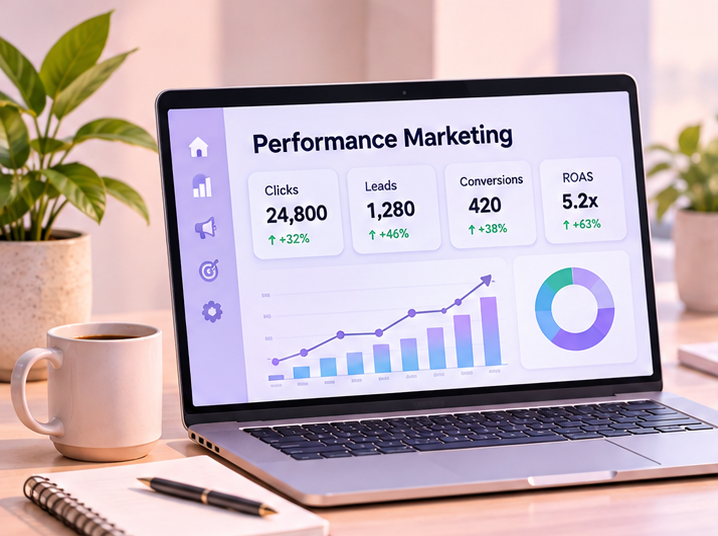
Performance marketing is a form of digital marketing where advertising campaigns are planned, measured and optimised around specific business outcomes.
These outcomes can include:
- Generating qualified leads.
- Increasing online sales.
- Driving website traffic.
- Getting app installations.
- Increasing product enquiries.
- Acquiring new customers.
For example, imagine an online clothing store running Instagram and Google Ads with a monthly advertising budget of ₹20,000.
Instead of measuring success only through impressions or clicks, the business tracks how many people visited its website, added products to their carts and completed purchases.
This allows the business to identify which campaigns are generating sales and where its advertising budget should be invested.
The main objective is simple: make marketing accountable to measurable business results.
2. How Does Performance Marketing Work?
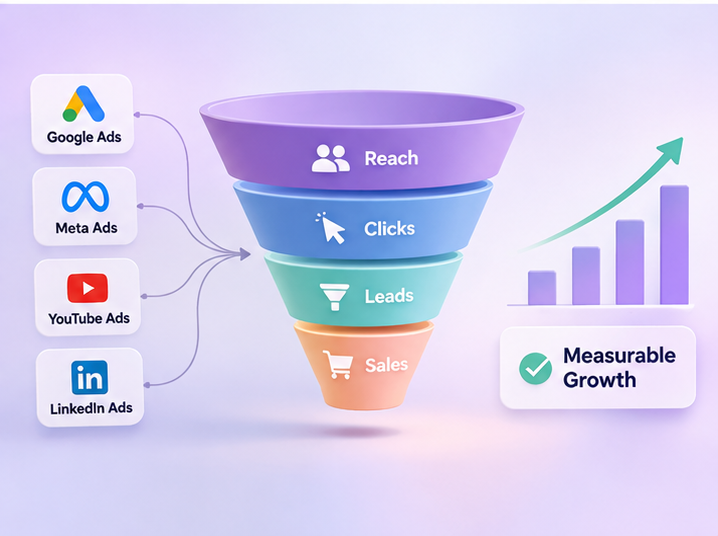
A successful campaign requires more than launching advertisements. It involves planning, execution, tracking and continuous optimisation.
Here is how the process generally works:
Step 1: Define Your Marketing Goals
Start by identifying what you want to achieve. Your objective could be generating leads, increasing purchases or improving customer acquisition.
Step 2: Identify Your Target Audience
Understand your potential customers, including their interests, demographics, purchasing behaviour and problems.
Step 3: Choose the Right Advertising Channels
Select platforms according to your audience and business objectives. For example, Google Ads can capture existing search demand, while Meta Ads can introduce products to relevant audiences.
Step 4: Create and Launch Campaigns
Develop advertisements with relevant messaging, engaging creatives and clear calls to action.
Step 5: Track Conversions and Performance
Use conversion tracking and analytics tools to understand how users interact with your advertisements and website.
Step 6: Optimise and Scale
Analyse campaign performance, test different creatives and audiences, improve landing pages and allocate more budget to campaigns delivering profitable results.
3. Different Channels of Performance Marketing
Businesses can use several digital advertising channels depending on their target audience and marketing objectives.
Google Ads
Google Ads allows businesses to reach people actively searching for products or services.
For example, a person searching for “digital marketing agency in Delhi” may see a relevant search advertisement.
It is particularly useful for capturing high-intent customers.
Meta Ads (Facebook and Instagram)
Meta Ads help businesses reach potential customers through Facebook and Instagram.
Businesses can use image advertisements, reels, videos and carousel formats to promote their products and services.
For example, an e-commerce jewellery brand can use Instagram advertisements to showcase its latest collection and encourage online purchases.
YouTube Advertising
YouTube Ads allow businesses to promote video content to relevant audiences.
They can help demonstrate products, communicate brand messages and generate website traffic or enquiries.
LinkedIn Advertising
LinkedIn Ads are particularly useful for B2B companies that want to reach professionals, decision-makers and businesses based on job roles, industries and company information.
Affiliate Marketing
Affiliate marketing involves partnering with publishers, creators or other affiliates who promote your products in exchange for a commission on agreed actions, such as completed purchases.
4. Important Performance Marketing Metrics You Should Know
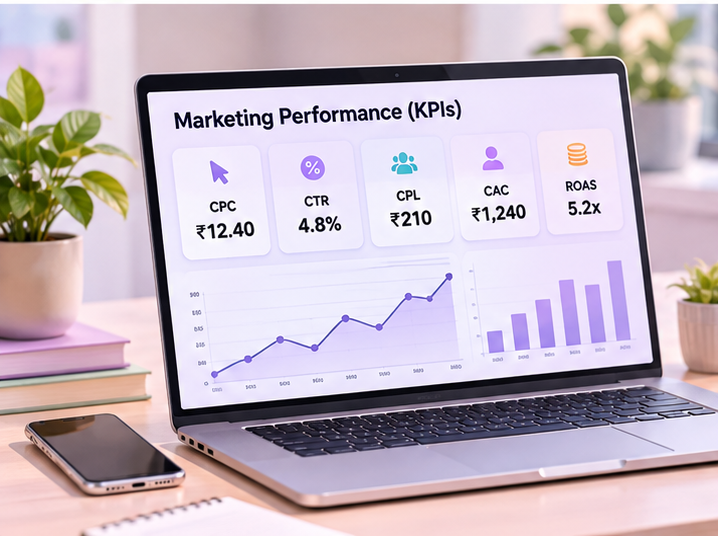
Measuring campaign performance is essential for understanding whether your advertising investment is generating business value.
Here are some important metrics every marketer should understand:
| Metric | Meaning |
|---|---|
| CPC | Cost Per Click |
| CPM | Cost Per 1,000 Impressions |
| CTR | Click-Through Rate |
| CPL | Cost Per Lead |
| CPA | Cost Per Acquisition |
| CAC | Customer Acquisition Cost |
| ROAS | Return on Ad Spend |
| ROI | Return on Investment |
Let’s understand a few important calculations.
Cost Per Click (CPC)
CPC = Total Ad Spend ÷ Total Clicks
If you spend ₹5,000 and receive 1,000 clicks, your average CPC is ₹5.
Cost Per Lead (CPL)
CPL = Total Ad Spend ÷ Total Leads
If you spend ₹10,000 and generate 50 leads, your CPL is ₹200.
Return on Ad Spend (ROAS)
ROAS = Revenue Generated ÷ Advertising Spend
If your business generates ₹50,000 in revenue from ₹10,000 in advertising expenditure, your ROAS is 5x.
However, remember that ROAS measures attributed revenue, not profit. Product costs, shipping, taxes, discounts and other expenses must also be considered when evaluating profitability.
5. Benefits of Performance Marketing for Businesses
A well-planned campaign can provide several advantages.
Measurable Results: Businesses can monitor campaign performance through clicks, conversions, leads and sales.
Better Budget Control: Campaign budgets can be adjusted based on performance and business objectives.
Targeted Advertising: Businesses can reach audiences based on search intent, interests, demographics and behaviour.
Continuous Optimisation: Advertisements, landing pages and audience strategies can be tested and improved over time.
Scalability: Campaigns delivering profitable results can receive additional investment, provided performance remains sustainable.
Improved Decision-Making: Analytics helps marketers understand customer behaviour and make decisions based on actual campaign data.
6. Performance Marketing vs Traditional Marketing
Both approaches play important roles in business growth, but their methods of measurement and execution differ.
| Comparison | Performance Marketing | Traditional Marketing |
|---|---|---|
| Channels | Google, Meta, YouTube | TV, newspapers, billboards |
| Measurement | Clicks, leads, sales | Reach and estimated exposure |
| Targeting | Audience and intent-based | Often broader audiences |
| Optimisation | Continuous campaign testing | Often slower to adjust |
| Budget | Flexible campaign budgets | Often higher fixed media costs |
| Results | Trackable digital conversions | Often harder to attribute |
Performance marketing is useful for measurable customer acquisition, while traditional marketing can support wider brand awareness.
Businesses can combine both approaches depending on their objectives.
7. Common Performance Marketing Mistakes to Avoid
Even well-funded advertising campaigns can fail when the underlying strategy is weak.
Here are some common mistakes:
Focusing Only on Clicks: More clicks do not necessarily mean more customers. Focus on qualified traffic and actual conversions.
Ignoring Landing Page Experience: If your website is slow, confusing or difficult to navigate, potential customers may leave without taking action.
Poor Conversion Tracking: Incorrect tracking can lead to misleading campaign reports and poor optimisation decisions.
Not Testing Ad Creatives: Running the same advertisements for too long can lead to creative fatigue and declining performance.
Scaling Campaigns Too Quickly: Increasing advertising budgets without understanding profitability can increase acquisition costs and business losses.
Ignoring Customer Acquisition Cost: A campaign may generate revenue but still be unprofitable if the cost of acquiring customers is too high.
8. How to Get Started With Performance Marketing
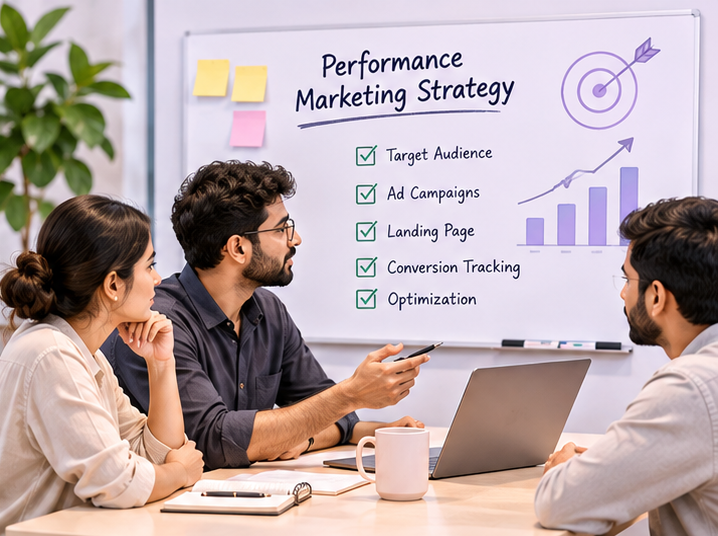
If you are planning to start advertising your business, follow this simple approach:
Identify your business goals and target audience.
Set a realistic advertising budget.
Choose the most relevant advertising platform.
Develop compelling advertisements and landing pages.
Configure conversion tracking using tools such as Google Analytics 4 and Google Tag Manager.
Monitor CPC, CTR, CPL, CAC and ROAS.
Test, analyse and optimise campaigns regularly.
Start with a clear objective instead of trying to advertise across every platform simultaneously.
The right strategy depends on your industry, competition, customer behaviour and available budget.
Final Thoughts
Performance marketing is not simply about spending money on online advertisements. It is about understanding customer behaviour, measuring campaign outcomes and making informed decisions to improve business growth.
From Google Ads and Meta Ads to affiliate marketing and conversion optimisation, businesses have several opportunities to reach their target audiences and generate measurable results.
However, successful campaigns require the right strategy, accurate tracking, relevant creatives and continuous optimisation.
At SocialGrowUp, we believe marketing should deliver more than visibility. It should contribute to meaningful business outcomes.
If you want to generate quality leads, increase online sales or improve your advertising performance, the right digital marketing strategy can help move your business forward.
Ready to grow your business?
Connect with SocialGrowUp and explore how data-driven digital marketing can help your brand reach its next growth milestone.
Frequently Asked Questions
1. What is performance marketing in simple words?
It is a results-focused advertising approach where businesses measure campaigns through actions such as clicks, leads, sales and customer acquisitions.
2. Which platforms are used for performance marketing?
Popular platforms include Google Ads, Facebook Ads, Instagram Ads, YouTube Ads, LinkedIn Ads and affiliate marketing networks.
3. Is performance marketing suitable for small businesses?
Yes. Small businesses can start with manageable advertising budgets, test different campaigns and increase investment based on measurable results.
4. What is the difference between performance marketing and digital marketing?
Digital marketing is the broader field of promoting businesses through online channels. Performance marketing is a results-focused part of digital marketing that measures and optimises campaigns against specific outcomes.
5. How do you measure the success of a performance marketing campaign?
Success can be measured through conversion rate, cost per lead, customer acquisition cost, return on ad spend and overall profitability.
6. Is performance marketing better than SEO?
They serve different purposes. Performance marketing can generate paid traffic and leads, while SEO helps build organic visibility over time. Using both can create a balanced customer acquisition strategy.