
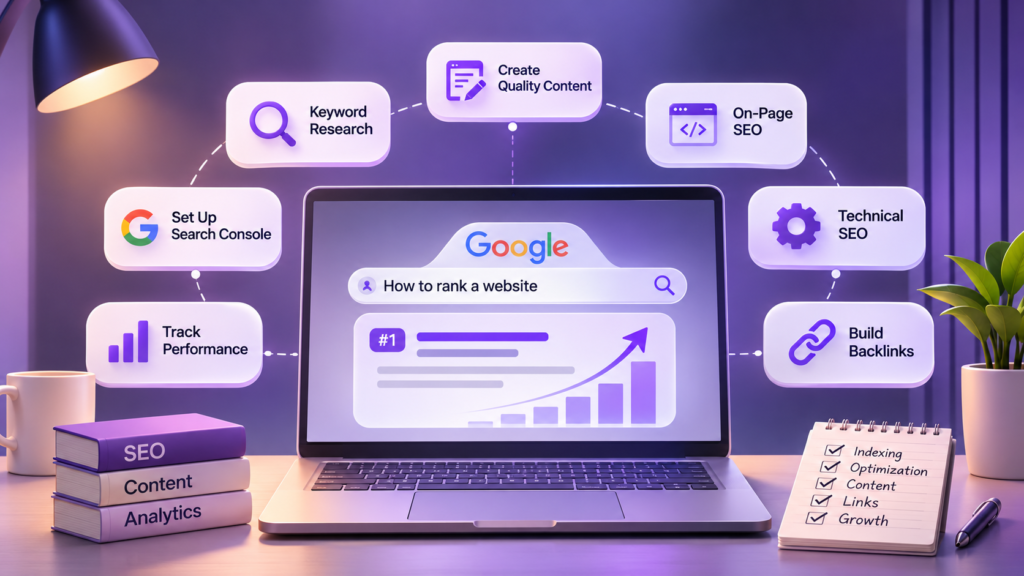
Launching a website is only the beginning. The real challenge is getting it discovered by your target audience through Google Search. Without a proper SEO strategy, even a well-designed website can struggle to generate organic traffic.
If you want to understand how to rank a website on Google, you need to focus on three important areas: technical SEO, high-quality content and website authority.
In this guide, we will cover 10 practical steps to improve your website’s visibility and build a sustainable organic traffic strategy.
1. Set Up Google Search Console
Google Search Console is one of the first tools you should configure after launching a website.
It helps you understand how Google discovers and evaluates your website.
What you should do:
- Verify your website ownership.
- Submit your XML sitemap.
- Check indexing status.
- Monitor search impressions, clicks and average positions.
- Identify crawling and indexing issues.
This helps you understand whether Google can access your important website pages.
2. Conduct Keyword Research
Keyword research helps you identify what your potential audience searches for on Google.
Instead of targeting highly competitive keywords immediately, start with relevant long-tail keywords that match your website’s content and audience.
Useful keyword research tools:
- Google Keyword Planner
- Ahrefs
- Semrush
- Ubersuggest
- Google Trends
For example, instead of targeting only “SEO”, a new website could target a more specific keyword such as “SEO tips for small business websites”.
Choose keywords based on search intent, relevance, competition and business value.
3. Understand Search Intent
Search intent refers to the reason behind a user’s search query.
There are four common types:
- Informational: Users want to learn something.
- Navigational: Users want to find a particular website.
- Commercial: Users are comparing products or services.
- Transactional: Users are ready to take action or purchase.
Your content should match the intent behind the target keyword. A product comparison keyword, for example, requires a different article structure from an informational search.
4. Create Helpful, High-Quality Content
Content is central to a sustainable SEO strategy.
Create articles that answer genuine audience questions rather than simply repeating keywords.
Follow these practices:
- Write original and useful information.
- Use clear H1, H2 and H3 headings.
- Include relevant examples and practical explanations.
- Break long paragraphs into smaller sections.
- Update outdated information.
- Add relevant images and descriptive alt text.
Focus on providing more value than competing pages, not simply producing longer articles.
Optimise Your On-Page SEO
On-page SEO helps search engines understand the relevance of your pages.
Optimise the following elements:
- SEO title: Include the primary keyword naturally.
- Meta description: Write a compelling summary of the page.
- URL: Use short, descriptive URLs.
- Headings: Organise information logically.
- Images: Compress images and use descriptive alt text.
- Internal links: Connect related articles using relevant anchor text.
Avoid keyword stuffing. Use your primary and secondary keywords naturally throughout the content.
6. Improve Technical SEO
Technical SEO ensures that search engines can crawl, render and understand your website.
Important areas include:
- Mobile-friendly website design.
- HTTPS security.
- XML sitemap.
- Correct robots.txt configuration.
- Proper canonical tags.
- Functional internal links.
- Fast-loading pages.
- No accidental noindex directives on important pages.
Use Google PageSpeed Insights to evaluate website performance and identify areas for improvement.
7. Build Relevant Backlinks
Backlinks are links from other websites pointing to your website. Relevant, trustworthy backlinks can help establish your website’s authority.
You can earn backlinks through:
- Guest contributions to relevant websites.
- Original research and useful resources.
- Digital PR and industry mentions.
- Genuine business partnerships.
- Creating content that others naturally want to reference.
Prioritise relevance and quality over the number of backlinks. Avoid buying spammy links.
8. Build a Strong Internal Linking Structure
Internal links connect different pages within your website.
For example, an article about keyword research can link to another article about SEO tools.
A good internal linking structure helps visitors discover related content and helps search engines find important pages.
Make sure every important page is accessible through relevant internal links.
9. Track Your SEO Performance
SEO requires continuous monitoring and improvement.
Use these tools to evaluate your performance:
- Google Search Console: Monitor clicks, impressions, CTR and search positions.
- Google Analytics 4: Understand website traffic, engagement and conversions.
- Ahrefs or Semrush: Research keywords, competitors and backlinks.
Review your results regularly. Identify pages receiving impressions but few clicks, and improve their titles, descriptions and content where appropriate.
10. Stay Consistent and Update Your Strategy
Ranking a new website takes time. Publishing content once and expecting immediate results is not a sustainable strategy.
Develop a content calendar, publish consistently, update existing articles and monitor your competitors.
Prioritise topics related to your website’s main subject. This helps you build topical relevance instead of publishing unrelated content.
How Long Does It Take to Rank a New Website?
There is no fixed timeline for SEO results. Some pages may get indexed quickly, while meaningful ranking improvements can take several months or longer.
Your results depend on competition, content quality, website accessibility, relevance and overall SEO execution.
Focus on measurable improvements rather than expecting overnight rankings.
Final Thoughts
Learning how to rank a website requires more than inserting keywords into articles. It involves building a technically sound website, publishing useful content, earning relevant backlinks and continuously analysing performance.
Start with Google Search Console, conduct proper keyword research and build a consistent content strategy. Over time, these activities can help improve your website’s organic visibility and attract relevant visitors.