
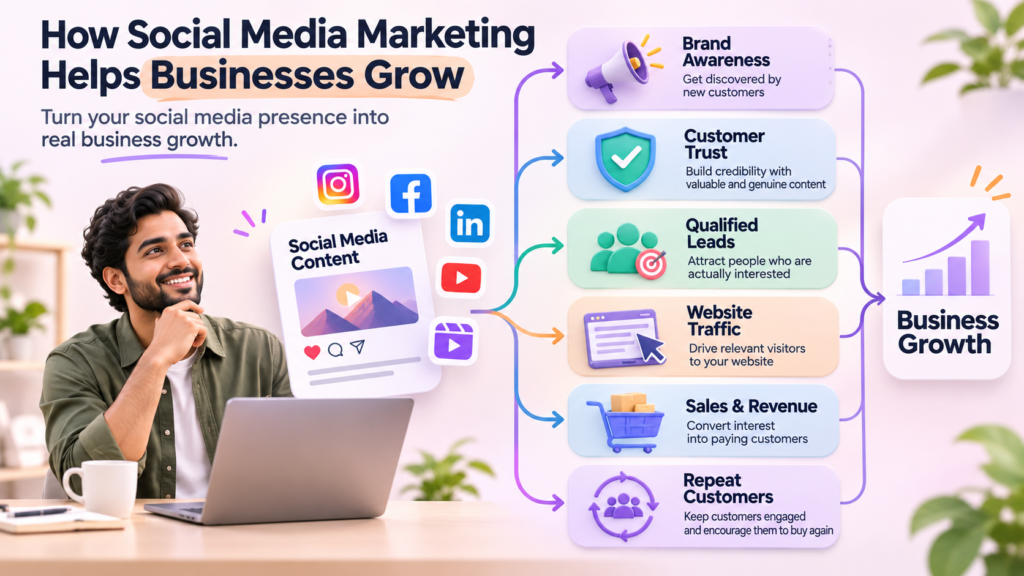
How Social Media Marketing Helps Businesses Grow
Social media marketing helps businesses grow by increasing brand visibility, attracting potential customers, building trust and generating sales through platforms such as Instagram, Facebook, LinkedIn and YouTube. Today, customers don’t just discover businesses through Google. They also explore Instagram profiles, watch product demonstrations, read customer reviews and compare brands on social media before making purchasing decisions. However, simply creating an account and posting regularly doesn’t guarantee business growth. Many businesses have thousands of followers but struggle to generate enquiries or sales. The problem is often a lack of strategy, inconsistent messaging and content that attracts attention without encouraging customers to take action. In this guide, we’ll explain how businesses can use social media effectively, choose the right platforms, create meaningful content and turn audience engagement into measurable business results. 1. What Is Social Media Marketing? Social media marketing is the process of promoting a business, product or service through social networking platforms to reach potential customers and build relationships with an audience. It involves more than publishing photographs or videos. A complete strategy includes content creation, audience research, community management, paid advertising, influencer collaborations and performance analysis. For example, an artificial jewellery brand can use Instagram to showcase its latest collections, Facebook to connect with customers and paid advertisements to attract people interested in fashion and accessories. The objective is to create meaningful interactions that eventually contribute to business growth. 2. How Does Social Media Marketing Help Businesses Grow? A well-planned strategy can support different stages of the customer journey. Increase Brand Awareness Before purchasing from a business, customers need to know that the brand exists. Social platforms help businesses introduce their products, services and brand identity to new audiences through reels, videos, carousels and other content formats. For example, a newly launched clothing brand can publish styling videos and product demonstrations to introduce its collection to potential customers. Build Customer Trust and Credibility People are more likely to consider businesses they recognise and trust. Social media provides opportunities to demonstrate expertise, share customer experiences and communicate directly with potential buyers. You can build credibility through: Genuine customer testimonials. Product demonstrations. Behind-the-scenes content. Educational posts. Customer questions and answers. Case studies and project results. Consistency and authenticity help customers understand what your business offers and why they should consider it. Generate Leads and Website Traffic Social platforms can become valuable sources of business enquiries when content includes clear next steps. You can direct interested users to your website, enquiry forms, WhatsApp or booking pages. For example, a digital marketing agency can publish a post about common SEO mistakes and invite business owners to request a website audit. This attracts people who already have an interest in the service. Increase Sales and Customer Retention Social platforms can support the entire buying journey, from product discovery to repeat purchases. Businesses can showcase new products, announce offers, answer purchase-related questions and share useful information with existing customers. After a purchase, customer reviews and user-generated content can encourage other people to consider the same brand. 3. Choose the Right Social Media Platform for Your Business One common mistake is trying to maintain an active presence on every social media platform. Each platform has different audiences, content formats and business opportunities. Your selection should depend on where your potential customers spend time and how they make purchasing decisions. Platform Best suited for Recommended content Instagram E-commerce, fashion and lifestyle brands Reels, stories and carousels Facebook Local businesses and communities Offers, videos and customer reviews LinkedIn B2B companies and professionals Industry insights and case studies YouTube Education and product demonstrations Tutorials and long-form videos Pinterest Fashion, home decor and lifestyle Product inspiration and visual guides For example, a jewellery brand may benefit more from Instagram and Pinterest because customers want to see product designs and styling ideas. A B2B consulting company may find LinkedIn more relevant for reaching business owners and decision-makers. Practical tip: Start with two or three platforms where your target customers are most active. Build consistency before expanding to additional channels. 4. Create Content That Attracts and Converts Customers Content is one of the most important parts of a successful social media strategy. However, posting promotional content every day can make your brand repetitive and reduce audience interest. Instead, create content around different customer needs. Consider these four content pillars: Educational Content: Share useful information, tips, tutorials and solutions to common customer problems. Engagement Content: Use polls, questions, interactive stories and discussions to encourage participation. Promotional Content: Showcase products, services, offers and new launches with clear calls to action. Trust-Building Content: Share customer reviews, testimonials, behind-the-scenes videos and real business experiences. For example, a digital marketing agency can publish SEO tips, website audits, advertising insights and campaign case studies. This approach demonstrates expertise while giving potential customers a reason to follow the brand. 5. Use Social Media Advertising to Reach More Customers Organic content helps businesses build an audience, but reaching new customers can take time. Paid advertising provides another way to introduce your products and services to relevant audiences. Platforms such as Meta Ads allow businesses to target users based on location, interests, demographics and other available audience signals. For example, an online jewellery store can run Instagram advertisements showcasing its latest collection to relevant audiences. To improve advertising performance: Define a clear campaign objective. Understand your target audience. Create relevant advertising creatives. Use a strong call to action. Send visitors to a relevant landing page. Track leads, purchases and customer acquisition costs. Don’t judge advertising success only by likes, impressions or clicks. Measure whether campaigns generate profitable customers. 6. Build Strong Customer Relationships Through Engagement Social media is not just a publishing platform. It is also a communication channel. When customers comment on your posts, ask questions or send direct messages, they expect businesses to respond. Ignoring these interactions can create a poor customer experience. Improve engagement by: Responding to comments and messages. Answering frequently asked questions. Sharing genuine customer feedback. Acknowledging customer mentions. Encouraging conversations around your products. Providing
How Social Media Marketing Helps Businesses Grow Read More »