
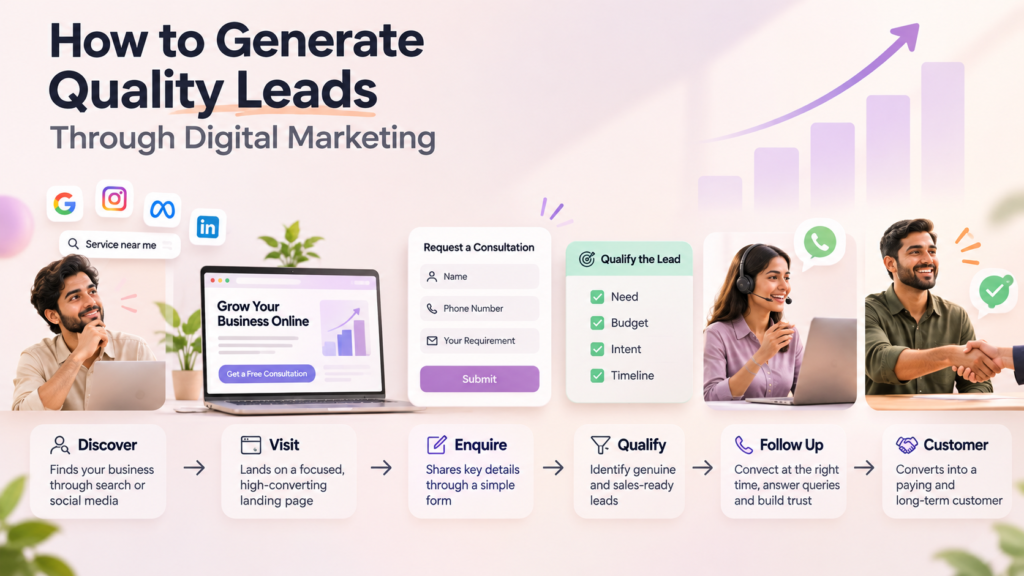
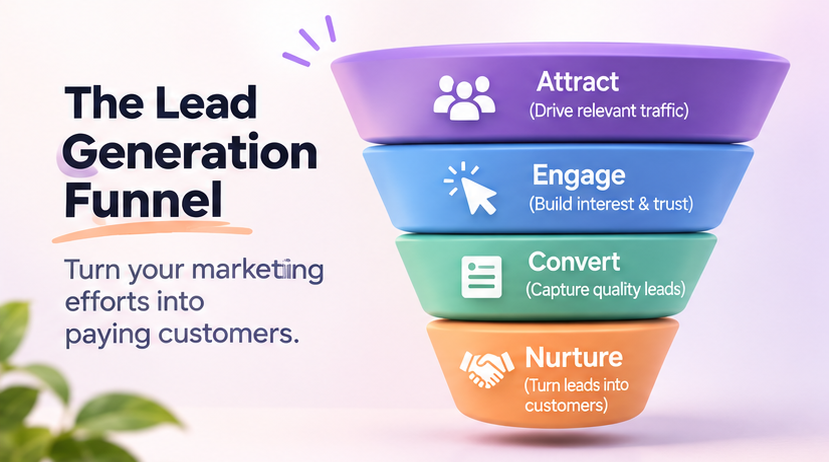
Generate quality leads through digital marketing by reaching the right audience, understanding their needs and offering solutions that encourage them to take action. Businesses today have multiple ways to attract potential customers, but getting enquiries is only the first step. The real challenge is converting those enquiries into paying customers.
Imagine spending ₹15,000 on advertising and receiving 100 enquiries. Initially, the campaign looks successful. However, after contacting those people, you discover that most are not interested, cannot afford your services or are simply exploring options.
This is a common problem for businesses investing in digital marketing.
The solution is not always to increase your advertising budget. Sometimes, you need to improve your targeting, marketing message, website experience and follow-up process.
In this guide, we will explore practical ways to generate quality leads, attract relevant prospects and build a more effective customer acquisition process.
1. Understand Your Ideal Customer Before Running Campaigns
One of the biggest mistakes businesses make is trying to reach everyone.
If your advertisements target a broad audience without considering customer requirements, you may receive many enquiries that have little chance of converting.
Before choosing any lead generation strategy, start by understanding your ideal customer.
Consider these questions:
- Who needs your product or service?
- What problem are they trying to solve?
- Where are they located?
- What is their approximate budget?
- What makes them choose one business over another?
For example, if you provide website development services, your ideal customers might be small businesses, startups and established companies that need a professional website.
Your advertising should reach these potential customers rather than targeting everyone interested in technology.
Practical tip: Create a simple customer profile before launching any campaign. Understanding your audience makes it easier to generate quality leads through relevant advertising messages and better targeting.
2. Use SEO to Attract People Already Searching for Your Services
Search Engine Optimization (SEO) helps your website appear when potential customers search for relevant products or services on Google.
Unlike advertisements that depend on continuous spending, organic search can build a sustainable source of website traffic over time.
For example, someone searching for “digital marketing agency in Delhi” is potentially looking for professional marketing services.
You can attract relevant visitors by:
- Targeting keywords related to your services.
- Creating helpful blogs that answer customer questions.
- Optimising individual service pages.
- Improving website speed and mobile experience.
- Building a properly optimised Google Business Profile.
- Collecting genuine customer reviews.
However, ranking for a keyword is not enough. Your landing page should clearly explain what you offer, who you help and how visitors can get started.
Focus on keywords with commercial intent, such as “SEO services for small businesses” or “Google Ads agency in Delhi”, alongside informational blog keywords.
A well-planned SEO strategy can help generate quality leads from people who are already looking for the services your business provides.
3. Run Google Ads to Reach High-Intent Customers
Google Ads can help businesses connect with people who are actively searching for specific products or services.
For example, someone searching for “best interior designer in Gurgaon” may already be considering hiring a professional.
This makes Google Search Ads particularly useful for capturing existing customer demand.
To improve lead quality:
- Use relevant keywords with clear search intent.
- Add negative keywords to exclude irrelevant searches.
- Target locations where you actually provide services.
- Write advertisements that clearly explain your offering.
- Direct visitors to relevant landing pages.
- Track meaningful conversions, including qualified calls and enquiries.
For instance, an interior design company operating in Gurgaon should avoid spending its budget on irrelevant searches from locations it cannot serve.
Practical tip: Don’t optimise Google Ads campaigns only for the lowest cost per lead. A slightly more expensive lead may be more valuable if it has a higher probability of becoming a customer.
The objective is to generate quality leads that have genuine interest in your services, not simply increase the number of form submissions.
4. Use Social Media Marketing to Build Interest and Generate Enquiries
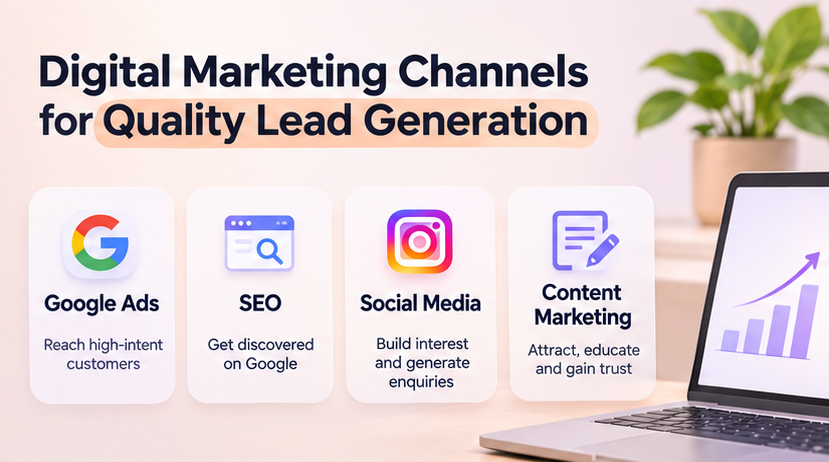
Not every potential customer actively searches for a product or service.
Some discover businesses through Instagram, Facebook and LinkedIn.
Social media marketing helps businesses introduce their offerings, demonstrate expertise and build trust with potential customers.
You can use different content formats:
- Educational reels and videos.
- Customer testimonials.
- Before-and-after project demonstrations.
- Product demonstrations.
- Industry tips and informative carousels.
- Case studies and business results.
For example, a digital marketing agency can publish a short video explaining why businesses receive website traffic but fail to generate enquiries.
This type of content attracts people experiencing that exact problem.
You can then encourage interested viewers to visit your website, send a WhatsApp message or request a consultation.
Practical tip: Focus on content that answers real customer questions rather than publishing promotional posts every day. Helpful content can build trust and support your efforts to generate quality leads organically.
5. Create Landing Pages That Convert Visitors into Leads
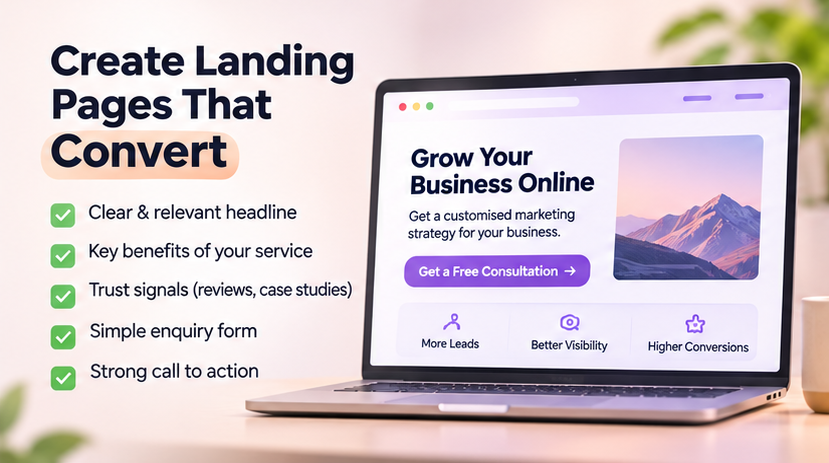
Getting visitors to your website is only half the job. Your website must also give them a clear reason to take action.
A common mistake is sending every advertising visitor to the homepage, even when the advertisement promotes a specific service.
Instead, create dedicated landing pages.
A good landing page should include:
Clear headline: Explain exactly what you offer.
Relevant benefits: Show how your service solves a customer’s problem.
Trust signals: Include genuine testimonials, reviews, case studies or portfolio examples.
Simple enquiry form: Ask only for the information needed to start a conversation.
Strong CTA: Use clear actions such as “Get a Free Consultation” or “Request a Quote”.
For example, if your Google Ads campaign promotes SEO services, the landing page should focus on SEO rather than displaying every service your agency offers.
Practical tip: Test different headlines, CTAs and form layouts. Small improvements in conversion rate can help generate quality leads without increasing advertising expenditure.
6. Use WhatsApp to Make Customer Enquiries Easier
In India, WhatsApp is an important communication channel for many businesses.
Potential customers often prefer sending a quick message instead of completing a lengthy enquiry form.
You can make the process easier by:
- Adding a WhatsApp contact button to your website.
- Using click-to-WhatsApp advertisements.
- Providing quick responses to common questions.
- Sharing relevant product or service information.
- Following up with people who have requested information.
For example, a real estate company can use WhatsApp to understand a prospect’s preferred location, property type and budget before arranging a call.
However, avoid sending repeated promotional messages without permission. Keep communication relevant and respect customer preferences.
7. Qualify Your Leads Before Passing Them to Sales
Not every enquiry is a potential customer.
Some people are researching, some are comparing prices, and others are ready to purchase.
This is why lead qualification is important when trying to generate quality leads consistently.
You can evaluate leads using four basic factors:
| Factor | What to understand |
|---|---|
| Need | Does the person actually need your service? |
| Budget | Can they afford your offering? |
| Intent | Are they seriously considering a purchase? |
| Timing | When are they planning to make a decision? |
For example, consider two enquiries received by a website development agency.
Lead A: Wants a business website, has a defined budget and wants to start next month.
Lead B: Is exploring website prices but has no clear requirement or timeline.
Both are enquiries, but Lead A has stronger buying intent.
Businesses can use CRM tools or a simple lead tracking spreadsheet to record these details and prioritise follow-ups.
8. Follow Up Quickly and Build Trust
Generating an enquiry does not mean the customer will automatically purchase.
Many potential customers contact multiple businesses before making a decision.
If your business takes too long to respond, the prospect may choose a competitor.
A good follow-up process includes:
- Acknowledge the enquiry.
- Understand the customer’s requirements.
- Answer their questions clearly.
- Share relevant pricing or service information.
- Arrange a consultation when necessary.
- Follow up at an appropriate time.
For example, if someone requests a quotation for website development, respond with a few relevant questions about their business, required features and expected timeline.
This creates a more useful conversation than immediately sending a generic sales message.
A structured follow-up process can make a significant difference because even relevant enquiries can be lost when businesses fail to communicate properly.
9. Measure Lead Quality Instead of Just Counting Enquiries
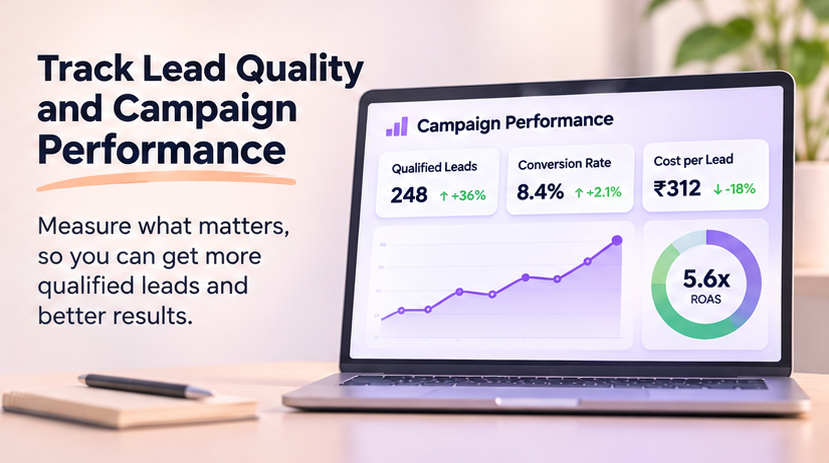
One of the most important parts of digital marketing is understanding which activities actually generate customers.
Consider this example:
A business runs two advertising campaigns with a combined monthly budget of ₹20,000.
| Metric | Campaign A | Campaign B |
|---|---|---|
| Advertising spend | ₹10,000 | ₹10,000 |
| Total leads | 100 | 40 |
| Qualified leads | 10 | 20 |
| Customers acquired | 2 | 8 |
| Cost per lead | ₹100 | ₹250 |
| Cost per customer | ₹5,000 | ₹1,250 |
Campaign A generates more enquiries at a lower cost per lead.
However, Campaign B generates more qualified leads and customers.
This demonstrates why the cheapest lead is not necessarily the most valuable lead.
Track these important metrics:
- CPL: Cost per Lead.
- Lead Qualification Rate: Percentage of leads meeting your qualification criteria.
- Conversion Rate: Percentage of leads becoming customers.
- CAC: Customer Acquisition Cost.
- ROAS: Revenue generated relative to advertising expenditure.
Use Google Analytics 4, Google Ads conversion tracking and a CRM to understand the complete journey from initial enquiry to customer acquisition.
Instead of focusing only on enquiry volume, identify which campaigns generate quality leads and contribute to actual business revenue.
Final Thoughts
Generating more enquiries is not necessarily the same as growing your business.
The real objective is to attract people who need your products or services, understand their requirements and provide a clear path towards becoming customers.
A successful lead generation strategy combines the right audience, useful content, relevant advertising, conversion-focused landing pages and consistent follow-up.
Start by identifying your ideal customers and improving your existing conversion process before increasing your marketing budget.
Remember, the goal is not just to generate quality leads but to convert the right prospects into long-term customers.
At SocialGrowUp, we believe digital marketing should focus on meaningful business growth rather than simply increasing clicks, impressions or enquiry numbers.
Whether you want to improve organic visibility, generate relevant enquiries or optimise your advertising campaigns, the right strategy can help your business attract better opportunities.
Looking to generate more relevant enquiries for your business?
Connect with SocialGrowUp and explore how a data-driven digital marketing strategy can help you reach the right customers.
Frequently Asked Questions
1. How can I generate quality leads through digital marketing?
Start by identifying your ideal customers, targeting relevant keywords, running focused advertising campaigns, creating useful content and improving your website’s conversion process. Follow up with enquiries and track which channels generate actual customers.
2. Which digital marketing channel generates the best leads?
It depends on your industry and audience. Google Ads can capture high-intent searches, SEO builds long-term organic visibility, and Meta Ads can create interest among relevant audiences. The best channel is the one that generates profitable customers.
3. How can small businesses generate leads without spending money on advertisements?
Small businesses can use organic SEO, Google Business Profile, social media content, customer referrals, networking and helpful blog articles to attract potential customers.
4. What is the difference between a lead and a qualified lead?
A lead is someone who expresses interest in a product or service. A qualified lead is someone whose requirements, budget, buying intent and timing make them a suitable potential customer.
5. How do I reduce the cost of lead generation?
Improve audience targeting, exclude irrelevant searches, optimise landing pages, test advertising creatives and focus on channels that generate qualified leads rather than simply maximising enquiry volume.
6. How do I know if my lead generation campaign is successful?
Evaluate qualified leads, customer acquisition cost, lead-to-customer conversion rate, revenue and return on advertising investment. A successful campaign should contribute to profitable business growth.