
Digital marketing Skills for Beginners has become an important part of how businesses attract customers, generate leads, and increase sales. From small businesses promoting their products on Instagram to large companies running data-driven advertising campaigns, digital channels play a significant role in modern marketing.
If you want to start a career in this field, understanding the digital marketing skills required for beginners in India can help you choose what to learn first. You do not need to master every marketing platform immediately, but you should understand the fundamentals and gain practical experience with the tools businesses use.
In this guide, you will learn the essential digital marketing skills, the tools worth exploring, and how to develop a portfolio that demonstrates your abilities to potential employers.
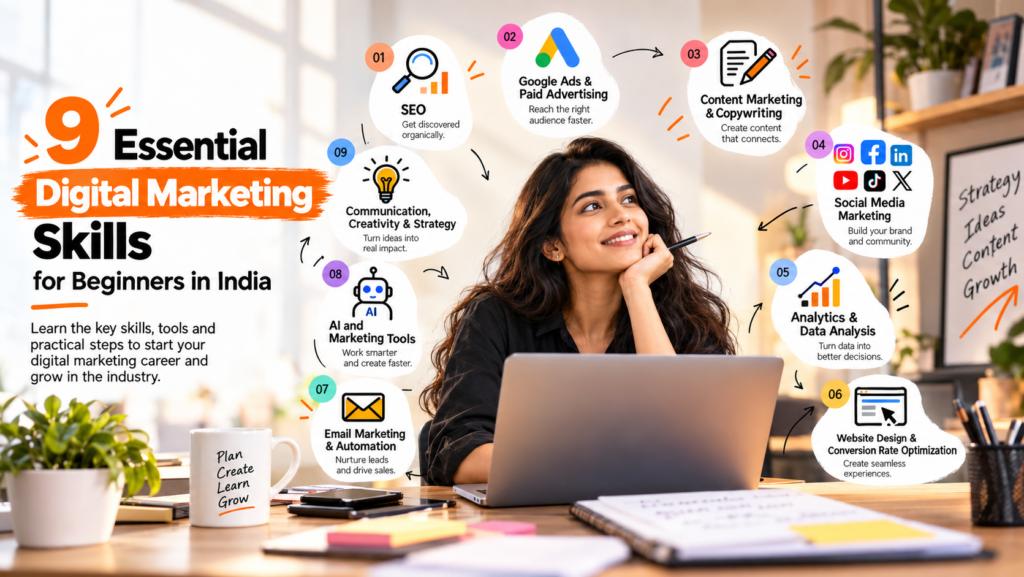
What Are Digital Marketing Skills?
Digital marketing skills are the practical abilities required to promote products, services, and brands through online channels. They combine marketing knowledge, creative thinking, technical proficiency, and data analysis.
Digital marketing Skills for Beginners may work on improving website rankings, managing paid advertisements, creating content, analyzing campaign performance, or optimizing the customer journey.
Some of the most important skills include:
- Search engine optimization (SEO)
- Search engine marketing and paid advertising
- Content creation and copywriting
- Social media marketing
- Website optimization
- Marketing analytics and reporting
- Email marketing and automation
- Artificial intelligence and marketing tools
- Communication and strategic thinking
- Conversion rate optimization
The importance of each skill depends on the role you want to pursue. An SEO specialist needs different technical expertise from a paid advertising specialist, while a performance marketer benefits from combining advertising, analytics, and conversion optimization.
1. Search Engine Optimization (SEO)
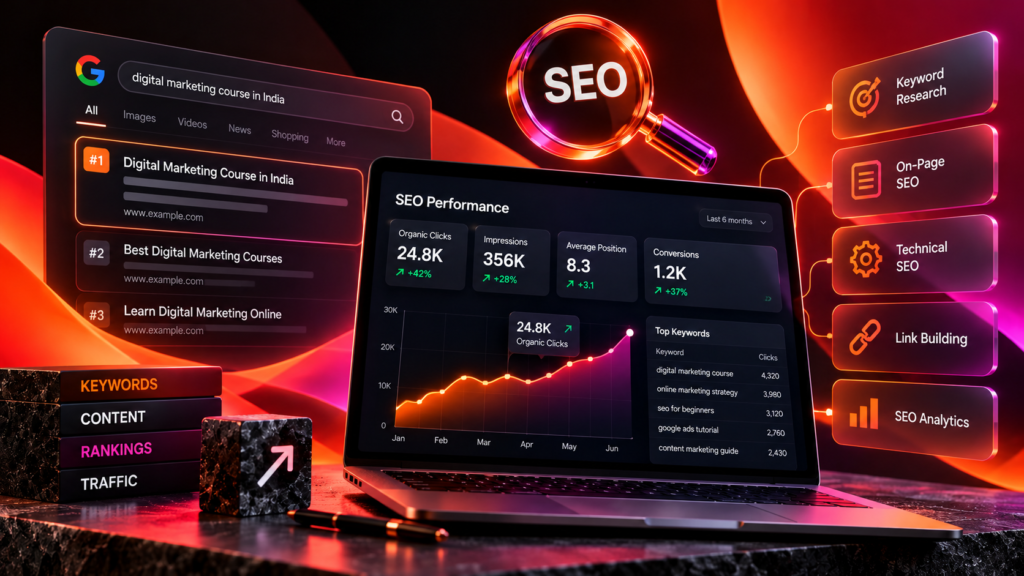
SEO is one of the fundamental digital marketing skills because it helps businesses attract relevant visitors from organic search results.
When people search for products, services, or answers on Google, SEO helps websites become more discoverable. Unlike paid advertising, organic search traffic does not require payment for each click, although SEO still involves investment in content, tools, and website improvements.
What should you learn in SEO?
Start with these essential areas:
- Keyword research: Find relevant search terms using tools such as Google Keyword Planner and Google Search Console.
- On-page SEO: Optimize titles, headings, URLs, internal links, and page content.
- Technical SEO: Understand crawling, indexing, mobile usability, redirects, and website performance.
- Content optimization: Create useful pages that satisfy search intent.
- Off-page SEO: Understand backlinks, brand mentions, and website authority.
- SEO analytics: Monitor impressions, clicks, rankings, and organic conversions.
2. Google Ads and Paid Advertising
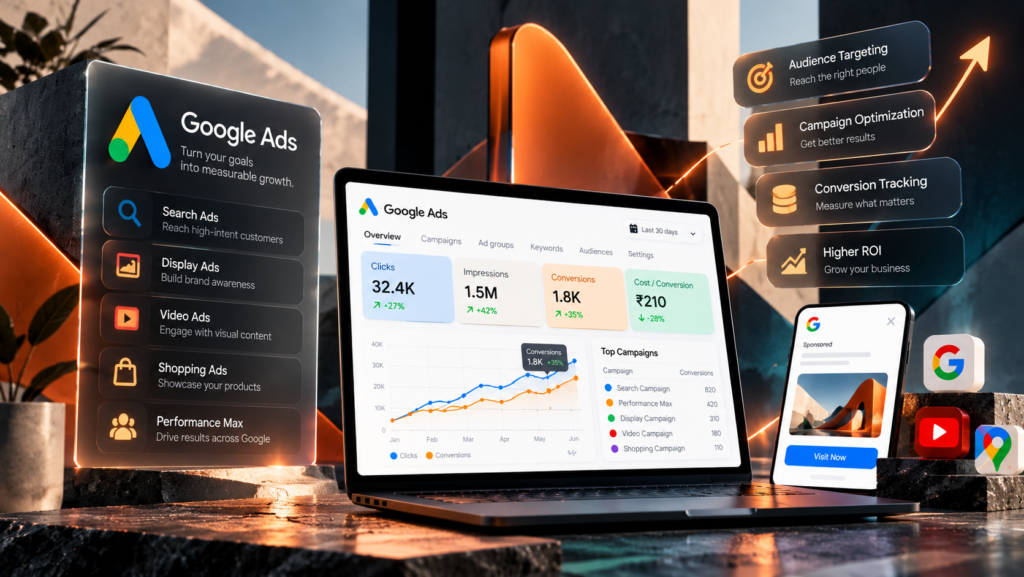
Paid advertising allows businesses to reach potential customers through platforms such as Google Ads and Meta Ads.
This skill is particularly valuable for companies that want to generate leads or sales within a defined budget. However, running advertisements successfully requires more than launching a campaign and selecting an audience.
You must understand the relationship between targeting, creative quality, bidding, landing pages, and conversions.
Key paid advertising skills
- Campaign structure and objective selection
- Keyword targeting and search intent
- Audience targeting and segmentation
- Ad copywriting and creative testing
- Budget allocation and bidding strategies
- Conversion tracking
- Campaign optimization and reporting
- Return on ad spend (ROAS) analysis
Example
Imagine an ecommerce business spends ₹10,000 on advertisements and generates ₹35,000 in attributed revenue.
Its revenue-based ROAS is:
ROAS = Advertising revenue ÷ Advertising spend
ROAS = ₹35,000 ÷ ₹10,000 = 3.5x
This means the business generated ₹3.50 in attributed revenue for every ₹1 spent on advertising.
However, a 3.5x ROAS does not automatically mean the campaign is profitable. Product costs, shipping, payment fees, returns, and other operating expenses must also be considered.
3. Content Marketing and Copywriting

Content marketing involves creating useful information that attracts, educates, and engages a target audience. Copywriting focuses more directly on persuading readers to take an action, such as purchasing a product, requesting a quotation, or signing up for a newsletter.
Both skills are important because digital marketing depends on communicating the right message to the right audience.
What should you practice?
- Writing SEO-friendly blog posts
- Creating website and landing page copy
- Writing social media captions
- Developing advertising headlines
- Writing product descriptions
- Creating email campaigns
- Developing content calendars
- Matching content to different stages of the customer journey
4. Social Media Marketing
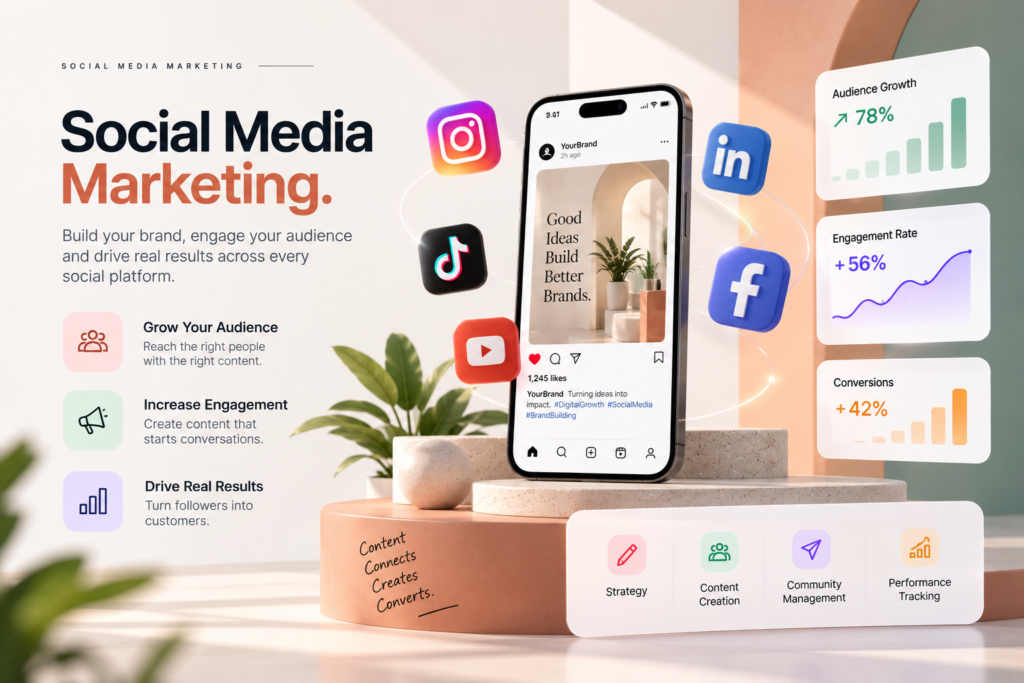
Socialmedia marketing involves using platforms such as Instagram, Facebook, YouTube, and LinkedIn to build brand awareness, engage audiences, and generate business results.
Each platform has different content formats, audience expectations, and strengths. Effective marketers choose channels according to business objectives rather than trying to maintain an active presence everywhere.
Essential social media skills
- Content planning and scheduling
- Short-form video and reel creation
- Creative development
- Audience research
- Community management
- Influencer collaboration
- Social media advertising
- Performance measurement
5. Digital Marketing Analytics and Data Analysis
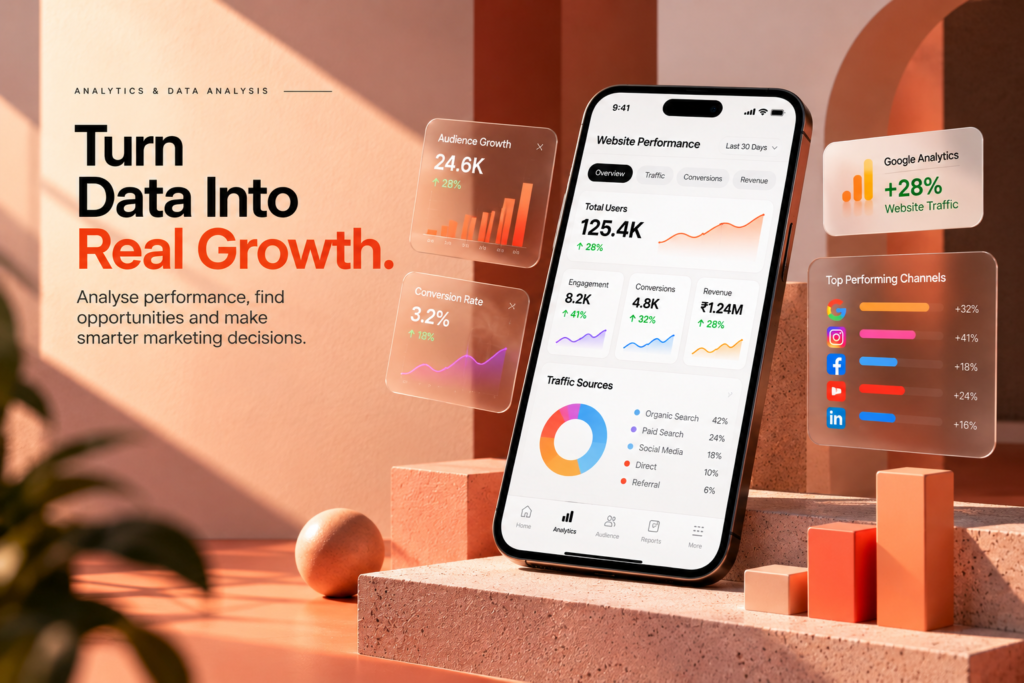
Analytics is one of the most valuable digital marketing skills because it helps you understand whether marketing activities are producing meaningful results.
Marketers collect data from websites, advertisements, search engines, and social platforms. The challenge is interpreting this information and using it to make better decisions.
Important metrics to understand
| Metric | What it measures |
|---|---|
| CTR | Percentage of impressions that result in clicks |
| CPC | Average cost per click |
| Conversion rate | Percentage of defined visitors or interactions that convert |
| CAC | Cost of acquiring a customer |
| ROAS | Attributed advertising revenue divided by advertising spend |
| AOV | Average order value |
| LTV | Estimated value generated by a customer over the relationship |
| Organic clicks | Clicks received from unpaid search results |
Example
Suppose a landing page receives 1,000 visitors and generates 30 leads.
Its lead conversion rate is:
Conversion rate = 30 ÷ 1,000 × 100 = 3%
If the conversion rate subsequently increases to 4%, the same traffic volume would produce 40 leads instead of 30.
That represents 10 additional leads without increasing traffic. You would still need to assess lead quality and sales conversion before concluding that the change improved profitability.
6. Website Design and Conversion Rate Optimization

A website is often where digital marketing activity turns into a measurable business outcome. Even an effective advertising campaign can underperform if the landing page is slow, confusing, or difficult to use.
Conversion rate optimization (CRO) focuses on improving the percentage of visitors who complete a desired action.
Essential website optimization skills
- Understanding user experience (UX)
- Creating clear page layouts
- Writing compelling calls to action
- Improving mobile usability
- Optimizing website loading speed
- Designing effective landing pages
- Identifying conversion barriers
- Testing alternative page elements
7. Email Marketing and Automation
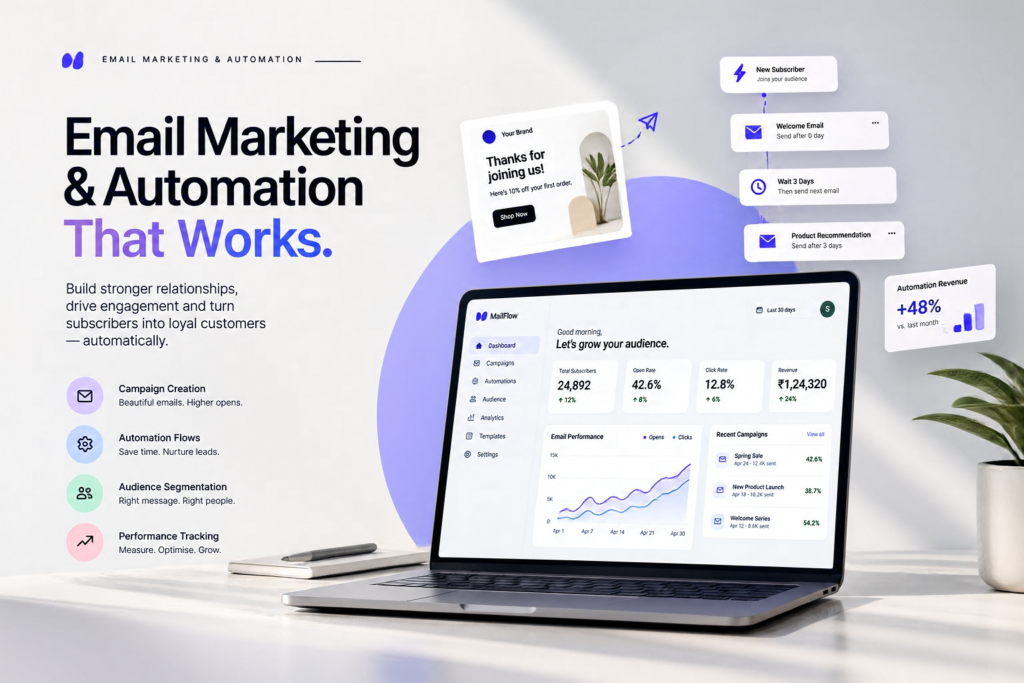
Email marketing enables businesses to communicate directly with people who have subscribed or otherwise provided appropriate permission to receive messages.
It can support customer acquisition, lead nurturing, repeat purchases, and retention. Automation makes these activities more efficient by sending relevant messages in response to customer actions.
What should you learn?
- Email copywriting
- Audience segmentation
- Campaign planning
- Welcome email sequences
- Lead nurturing workflows
- Customer retention campaigns
- Email performance reporting
- Consent and unsubscribe management
8. Artificial Intelligence and Marketing Automation
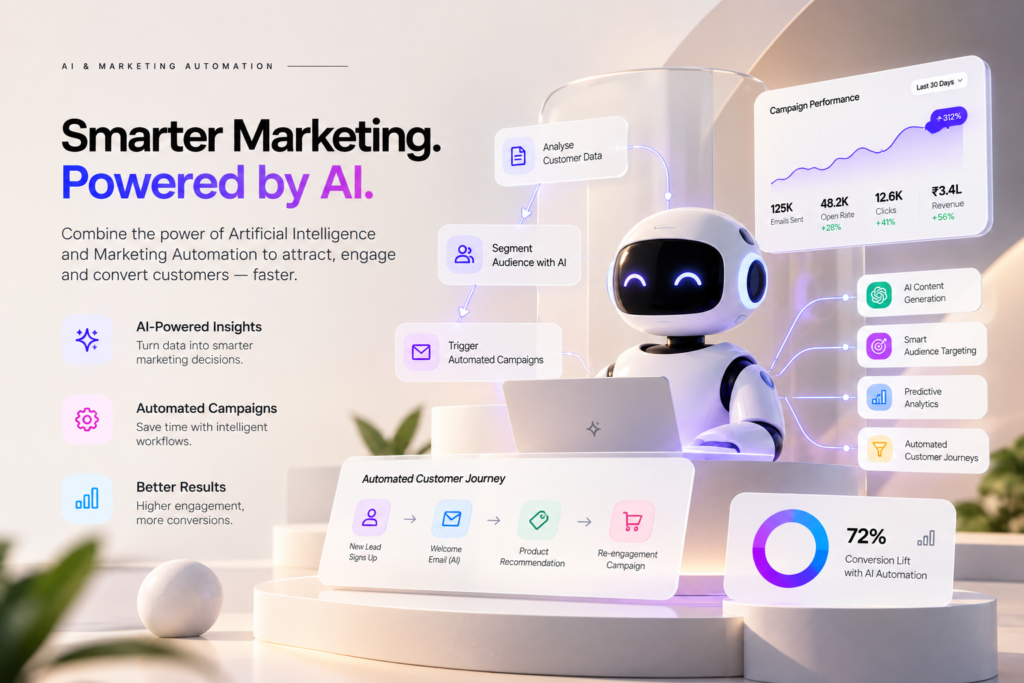
AI tools can help marketers research topics, generate initial content drafts, analyze information, and streamline repetitive tasks. Automation can also connect different parts of a marketing workflow.
However, AI-generated output still requires human judgment. Incorrect information, generic messaging, weak reasoning, and inaccurate campaign analysis can undermine results if the output is used without review.
Practical applications of AI in marketing
- Generating content ideas and outlines
- Organizing keyword research
- Drafting and testing advertising variations
- Summarizing campaign reports
- Creating customer segmentation hypotheses
- Supporting email personalization
- Automating repetitive reporting tasks
- Identifying potential performance anomalies
9. Communication, Creativity, and Strategic Thinking
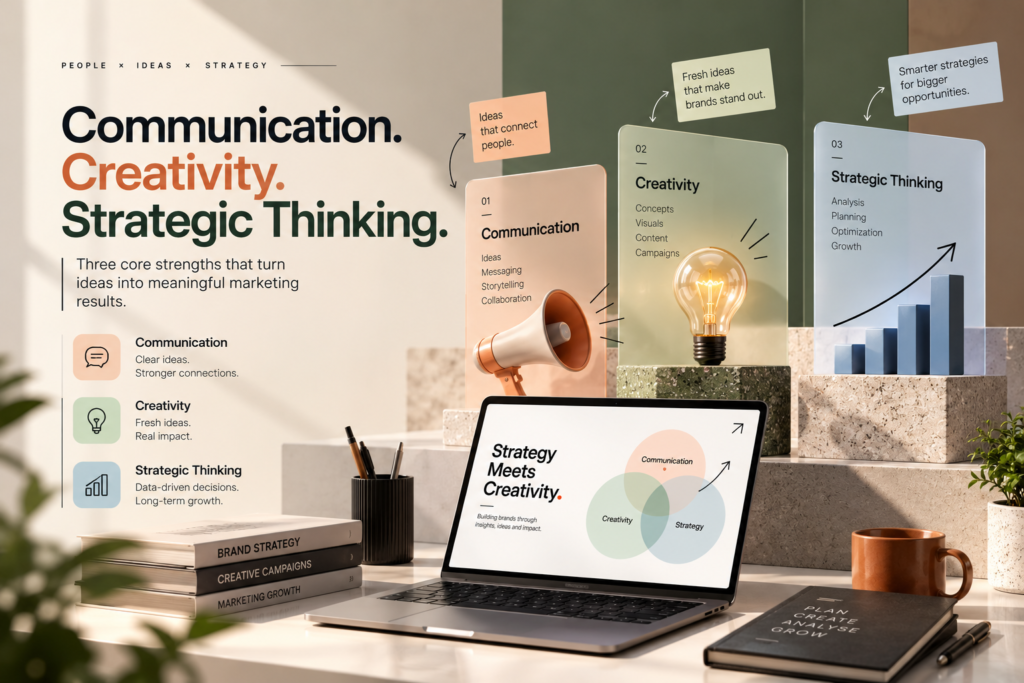
Technical knowledge alone is not enough to become an effective digital marketer. You must also explain your decisions, understand customer needs, collaborate with other teams, and develop practical solutions to business problems.
These skills become increasingly important when you manage budgets, present results, or work with clients.
Essential professional skills
- Clear written and verbal communication
- Creative problem-solving
- Critical thinking
- Time and project management
- Collaboration with designers and developers
- Understanding customer behavior
- Strategic planning
- Adaptability and continuous learning
How to improve these skills
Practice presenting a campaign report in simple language. Instead of saying that CPC increased, explain what changed, why it matters, and what you recommend testing next.
For example, if clicks become more expensive while conversion rates decline, investigate search terms, audience quality, creative performance, and landing page behavior before recommending a budget increase.
Strong marketers connect metrics to decisions.
Common Mistakes Beginners Should Avoid
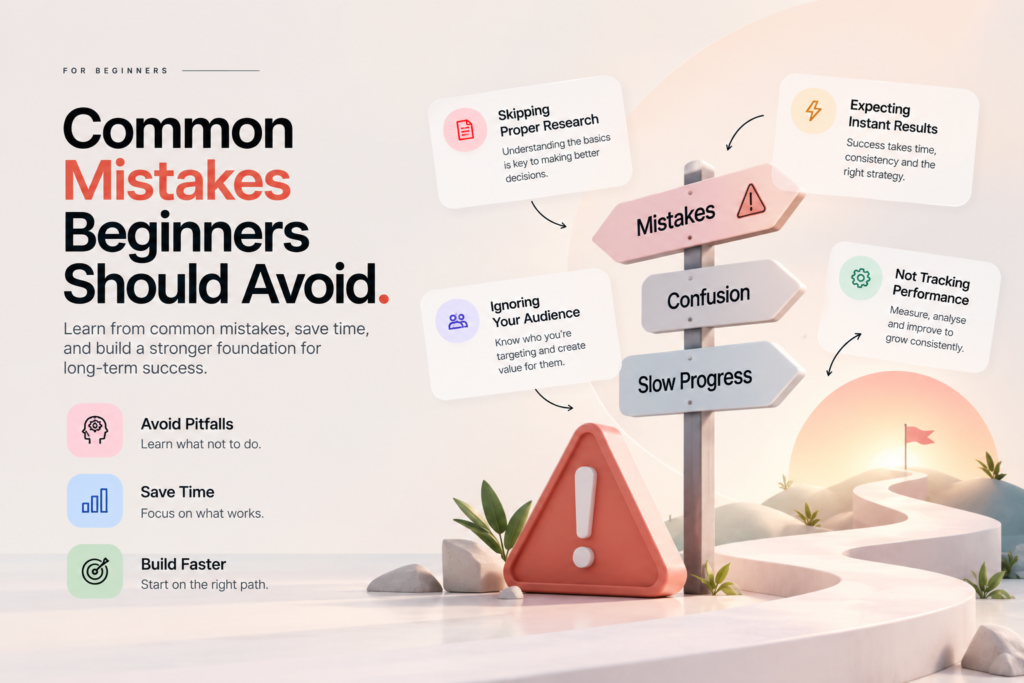
- Learning many tools without understanding marketing fundamentals.
- Collecting certificates without building practical projects.
- Judging campaigns by clicks or likes without measuring business outcomes.
- Using keywords unnaturally in content.
- Launching advertisements without proper conversion tracking.
- Treating AI-generated content as automatically accurate.
- Ignoring mobile usability and landing page quality.
- Reporting metrics without explaining what decisions they support.
The strongest learning approach combines structured study with repeated practice, measurement, and improvement.
Conclusion
Digital marketing Skills for Beginners in India extend beyond SEO or social media management. Employers and clients benefit from marketers who can understand customers, create relevant content, execute campaigns, analyze performance, and connect their work to business objectives.
Start by learning the fundamentals of SEO, paid advertising, content marketing, and analytics. Then develop practical projects that demonstrate your ability to solve marketing problems and explain your decisions.
You do not need to master every discipline at once. Build a strong foundation, select a specialization that matches your interests, and expand your skills through consistent practice.
Frequently Asked Questions
1. What are the most important digital marketing skills for beginners?
Start with SEO, content creation, social media marketing, paid advertising fundamentals, analytics, and communication. These provide a foundation for understanding how digital channels attract and convert customers.
2. Can I learn digital marketing without coding?
Yes. Most entry-level digital marketing work does not require advanced coding. However, basic HTML, CSS, and an understanding of website tracking can be useful for SEO, landing page optimization, and analytics implementation.
3. Which digital marketing skill should I learn first?
Start with marketing fundamentals and customer research, then learn keyword research, content marketing, and basic analytics. Add paid advertising once you understand campaign objectives, targeting, and measurement.
4. Is SEO better than Google Ads for beginners?
Neither is universally better. SEO can build long-term organic visibility, while Google Ads can generate targeted traffic more quickly when campaigns are configured effectively. The right choice depends on budget, competition, conversion economics, and business goals.
5. How long does it take to learn digital marketing?
You can learn foundational concepts within a few months with consistent study and practice. Developing professional competence takes longer and depends on your chosen specialization, project experience, and ability to interpret results.
6. Which digital marketing tools should beginners learn?
Start with Google Search Console, Google Analytics 4, Google Keyword Planner, Google Ads, Meta Ads Manager, Google Sheets, and a content management system such as WordPress. Add specialized tools as your projects require them.
7. Do I need a degree to start a digital marketing career?
A degree can be helpful for some employers, but requirements vary. Practical skills, relevant projects, communication, and demonstrated results can also strengthen your profile. Check the requirements for the roles you want to pursue.
8. How can I get my first digital marketing job without experience?
Build a portfolio with an SEO audit, a sample advertising plan, a content strategy, and an analytics dashboard. Apply for internships and entry-level roles, and clearly distinguish proposed projects from campaigns you have actually executed.